5 min read
The most significant outcomes of the CYANOTYPES Pilots were not always new courses, frameworks, or partnerships. Often, they were changes in how organisations understood learning itself. Read how experimentations encouraged participants to rethink assumptions and begin asking different questions.
Most organisations entered CYANOTYPES wanting to address a practical challenge. Improve programmes, design new courses, explore work-based learning, develop micro-credentials, and not to mention, build and strengthen partnerships. As the pilots unfolded, many discovered that the biggest changes were not the ones they had sought out and thus they began asking different questions.
The pilots became experimenting grounds, opportunities to test approaches and reconsider long-held assumptions about skills, education, collaboration, and organisational change. Gradually, common shifts in thinking began to emerge despite the diversity of the pilots.
“One important insight from this pilot [Exploring the Potential of CYANOTYPES Inclusivity Guidelines] was that context matters as much as content. A tool that works well for raising awareness within projects may not automatically translate into institutional practice.”
– Angelika Zelisko, Coordinator of CYANOTYPES at the University of Applied Arts Vienna
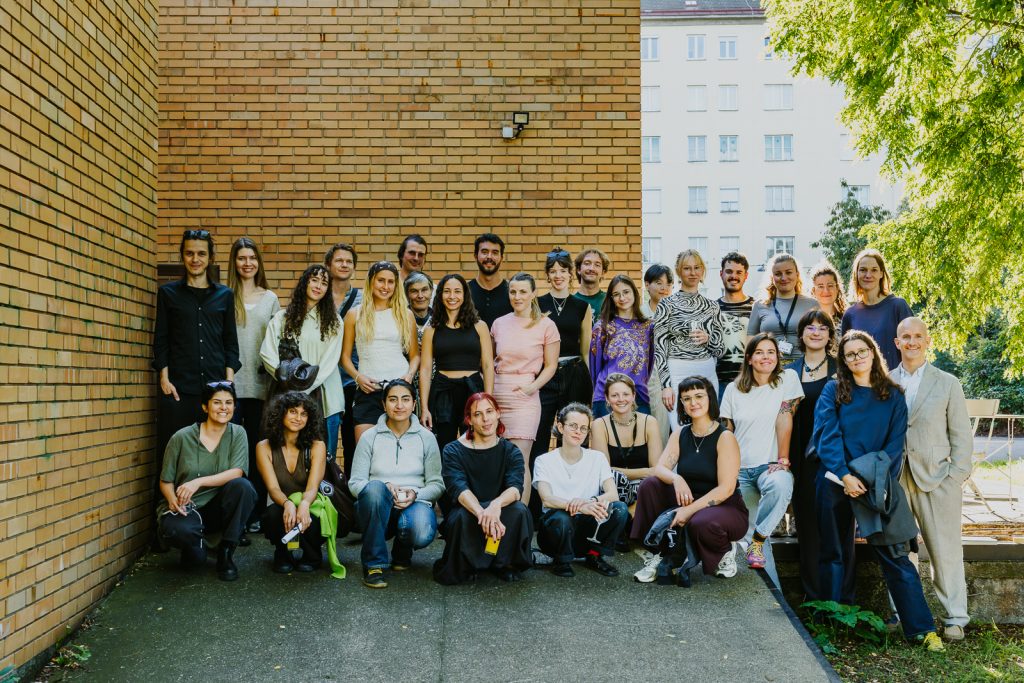
Many pilots initially focused on learners in higher educational institutions. Over time they recognised that learning also takes place among municipalities, employers, freelancers, local communities, cultural organisations, policymakers, and regional ecosystems. Several organisations discovered that learning emerges through relationships, with communities (rural, migrants, municipalities, etc.), regional partners, practitioners, and people working across disciplines and sectors. Participants described uncertainty, dialogue, and place-based collaboration as important learning experiences. For organisations such as RSP Creative South, strengthening a regional skills ecosystem depended less on mapping organisations than on strengthening the relationships between them. Learning increasingly became a characteristic of ecosystems, not solely institutions.
“We started creating an ecosystem even before the infrastructure was built. The building itself is not there yet, but we are creating this ecosystem of people and community. [Through our pilot] we now know the artists, the investors, the local authorities, the NGOs and universities.”
– Catia Fonseca on the pilot Montado ArtScapes – Regenerative Creative Ecosystems
“We were particularly interested in supporting people who are already involved in sustaining local cultural ecosystems but who rarely meet within a shared learning framework. By bringing together participants from different sectors and backgrounds, we hoped to create mutual learning opportunities and strengthen connections between education, cultural practice, and rural development.
– Prerna Bishnoi, NTNU Norwegian University of Science and Technology, on the pilot Can futures be rural?
As a result, collaboration itself became something that required deliberate practice: a competence. Pilot teams connected municipalities with universities, creative freelancers with policymakers, educators with cross-sector industries, and cultural organisations with local communities. Because they realised that effective collaboration requires its own capabilities, they were creating the conditions in which different perspectives have the opportunity to influence one another.
Furthermore, reflection also emerges as one of the most valuable elements of the process. Slowing down was key to notice assumptions they normally overlooked. Through this process, some discovered they had been asking the wrong questions, and others realised that familiar institutional language was preventing meaningful conversations among practitioners. Many described, as a result, moving away from solving predefined problems and moving towards understanding the systems that produced them.
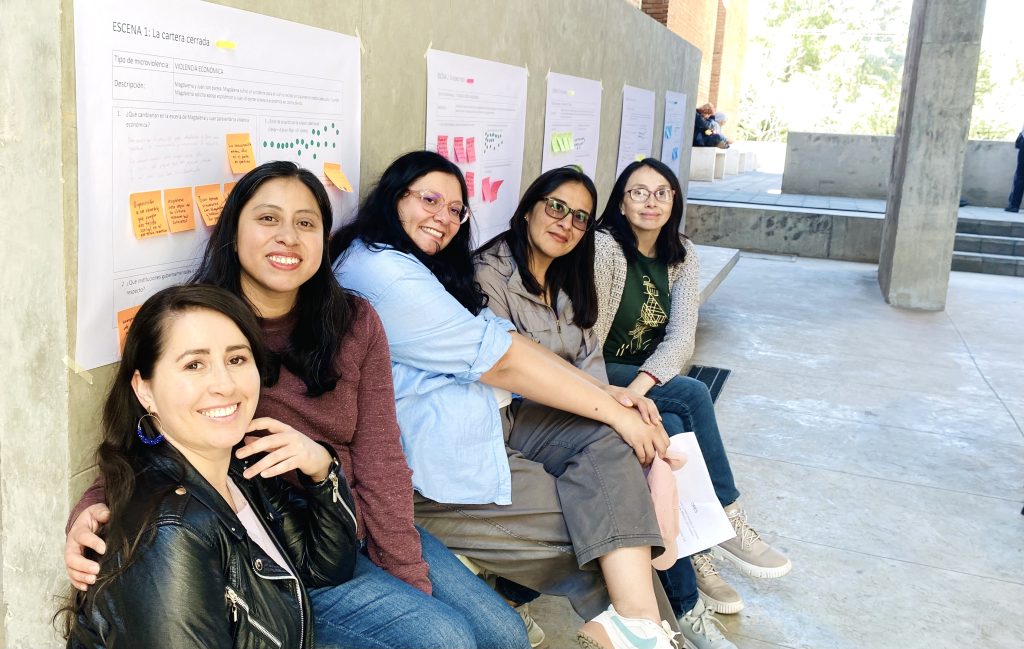
“I saw how they [students] were developing all the competences we expected. Creative Confidence went through the roof. They developed Working with Others, Collective Action, Managing Transformations, Narrative Design, Working with Values, Self-awareness and Empathy. At first, they were saying, ‘we’re designers, not actors.’ By the end they were improvising confidently, solving unexpected problems themselves, and trusting that they could adapt.”
– Liliana Fernanda Del Villar Arias, Escuela de Diseño del Instituto Nacional de Bellas Artes y Literatura — EDINBA, on the students participating in the pilot Developing Policy and Legislative Literacy for Creatives
Several organisations also began with the presumption that they needed to identify and improve missing skills. During the pilots, many shifted towards recognising competences they already had but never articulated or intentionally brought together. The CYANOTYES Framework often became a language for making existing practice and their connections visible. Participants found themselves picking out capacities they were regularly using: working across boundaries, navigating uncertainty, building trust, framing problems, and working collectively, even though they had never previously described these as competences.
Through the CYANOTYPES Framework, organisations became more interested in helping learners develop the confidence, empowerment, adaptability, and creative agency needed to navigate and respond to change. Higher education institutions reconsidered curricula, regional partnerships redesigned engagement strategies, intermediaries adopted new roles, and creative organisations began thinking less in terms of individual projects and more in terms of long-term ecosystems in which organisations can collaborate and improve their long-term capability. Across the pilots, organisations discovered that preparing for future skills requires creating new relationships, questioning familiar assumptions, and developing the confidence to experiment with diverse ways of learning. These contributions and experimentation suggest that, aside from what organisations currently teach and practice, the future of creative skills lies in how we learn, how we think about the why, imagine possible futures, and collaboratively, push boundaries forward.
“Storytelling and writing is often a solo exercise. This is sometimes where the stories we tell ourselves about our creative practices sabotage any progress we might make with them. People felt isolated and didn’t have a community of practice.”
– Todd Barrowclough, CORE Kollektiv, on creative migrants and internationally oriented creative professionals participating in the pilot Creative with Others
“Preparing for future skills often requires gradual change, iterative development and sustained dialogue across different parts of an organisation. Learning ecosystems are built through relationships, adaptation, and long-term commitment rather than rapid implementation alone.”
– Angelika Zelisko, Coordinator CYANOTYPES at the University of Applied Arts Vienna
The article Navigating the CYANOTYPES Pilots takes a closer look at how these insights are influencing organisations beyond the pilots themselves, and what this might mean for the future of creative skills across Europe and, potentially, worldwide.
This series is based on qualitative interviews conducted between June and August 2026 with organisations participating in the CYANOTYPES Pilots. The articles identify recurring themes, tensions, opportunities and lessons that emerged across pilots operating in different educational, organisational and regional contexts. Quotations are reproduced with permission and are attributed to the respective pilot organisations. Explore the CYANOTYPES Pilot Showcase and learn about each pilot’s idea that runs across diverse disciplines and sectors.
The Pilot Story
Read below a series of articles bringing together different pilot experiences on the motivations behind the work, the ways CYANOTYPES was applied, and patterns that emerged.